If you work in digital marketing, you’ve likely noticed that the search landscape is shifting beneath our feet. For years, the goal was clear: rank #1 on Google and capture that click.
Today, the goal is evolving. Users are increasingly getting answers without clicking a single link. This is the era of AI-powered search, and for specialized industries where accuracy and authority are paramount, understanding this shift is essential.
Let’s break down what Google’s AI Overviews mean for your brand and how a dual strategy of SEO and Generative Engine Optimization (GEO) can keep you visible.
What Are AI Overviews? (And Why Do They Matter)
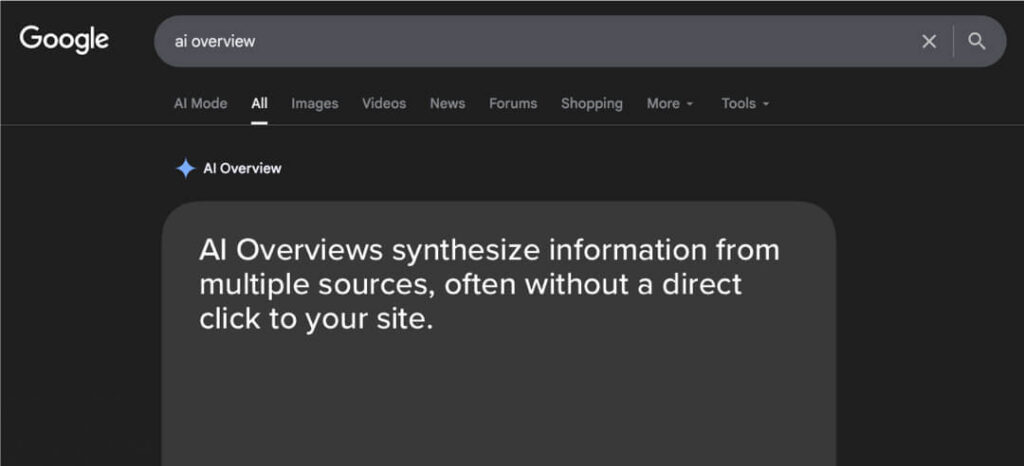
You might remember when Google experimented with its Search Generative Experience (SGE). Now, many of those features are rolling out as AI Overviews, concise, conversational answers generated by AI that appear at the very top of search results.
Instead of a list of blue links, users get a synthesized answer pulled from multiple sources across the web. For example, a search for “latest advances in cardiac ablation” might return a paragraph summary generated from several medical journals, device manufacturer sites, and news articles, all cited within the overview.
The Challenge for Life Science and MedTech
This new format presents a unique challenge for our core industries, MedTech, Life Sciences, and Technology. When a potential customer, say, a surgeon or a hospital administrator, asks a complex question, they get an instant answer. If your company’s data or expertise isn’t part of that AI-generated summary, you’ve just lost a massive opportunity to be seen as a thought leader.
Furthermore, in regulated industries, the stakes are high. Ensuring that the information being synthesized about your products or therapies is accurate, compliant, and sourced from your authoritative content is a new, critical responsibility.
GEO: Your New Competitive Advantage
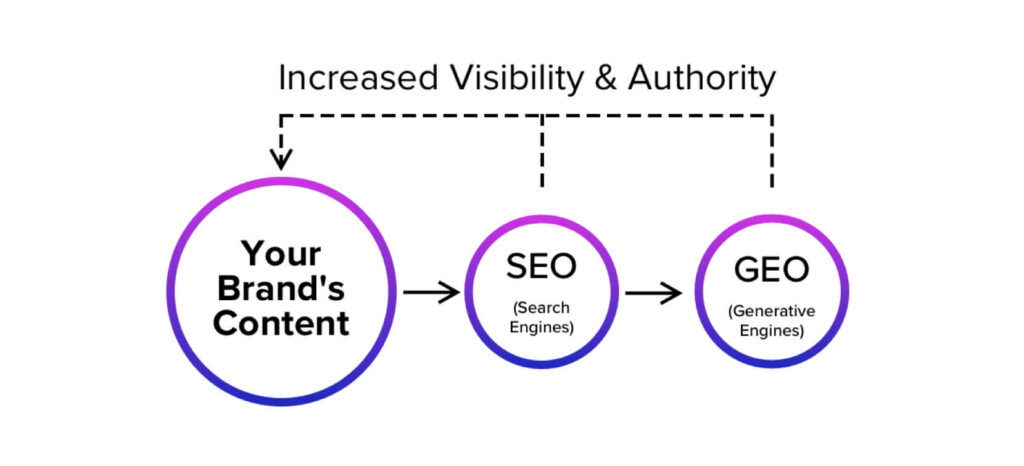
This is where Generative Engine Optimization (GEO) comes in. If traditional SEO helps you rank in the list of links, GEO helps you become the source cited within the AI’s answer. At D2 Creative, we view them as two sides of the same coin.
As we outline in our approach to Search and Generative Engine Optimization, GEO involves optimizing your digital content specifically to enhance its visibility and citation rate within Large Language Models (LLMs) and AI engines like Google’s Gemini or ChatGPT.
It’s not about tricking the system; it’s about making your content fundamentally more useful and authoritative for AI to reference.
The GEO Framework: Optimizing for AI Answers
So, what does GEO look like in practice? It builds on classic SEO best practices but with a sharper focus on how AI “reads” and trusts information.
- Establish Unmistakable Authority Cues AI models prioritize information from sources that demonstrate expertise. This means being clear about authorship. For a clinical study or a white paper, include author names, credentials, and links to their professional profiles. Cite primary sources and peer-reviewed data. This builds a web of trust that AI can recognize.
Prioritize Factual Consistency and Accuracy This should be your north star. Ensure your core product and therapy information is consistent across your entire digital ecosystem—from your website and blog to your press releases and regulatory filings. Contradictory information confuses AI and lowers your chances of being cited.
Structure Data for Clarity Schema markup is more important than ever. By using structured data (like MedicalWebPage, FAQ Page, or Product schema), you are essentially providing AI with a cheat sheet to your content. You’re telling the crawler exactly what a piece of information means, making it far easier for an AI to pull it into a coherent overview. This is a core part of any robust web design and development strategy.
Optimize for Direct Answers Think about the questions your audience asks at every stage of the funnel. A surgeon might ask, “What is the recovery time for procedure X?” An administrator might ask, “What is the total cost of ownership for device Y?” Create content that answers these questions concisely and directly at the top of the page, before diving into deeper detail. Clear, direct answers are gold for AI.
The Future is a Dual Strategy
The rise of AI Overviews doesn’t mean SEO is dead. Far from it. A strong SEO foundation ensures your site is technically sound and discoverable. But to truly own your space in this new landscape, you need to add a GEO layer.
By optimizing your content to be both search-engine friendly and AI-friendly, you build a resilient digital presence that captures traffic and builds authority across the entire ecosystem.
At D2 Creative, we help life science, MedTech, and technology companies navigate these complex shifts. We combine deep industry knowledge with a forward-looking approach to search. We don’t just react to change; we help you prepare for what’s next.
Ready to Future-Proof Your Organic Visibility?
Let’s build a strategy that integrates both SEO and GEO to protect and grow your brand’s authority.
Contact D2 Creative today to discuss how we can optimize your content for the future of search.