How to Create Clear, Engaging Patient Education Content (That's Not Just Another PDF)

You’re on the front lines of patient advocacy, education, and engagement and believe in empowering patients with the knowledge they need to take control of their health, but you face a tough reality:

  • Patients tune out because materials are dense, dry, or filled with jargon.
  • Navigating compliance and legal restrictions limits creative freedom in patient education.
  • Internal buy-in is hard to get, and you’re constantly fighting for budget and resources.
  • Health education competes with marketing noise and online content, yet lacks the creative edge to stand out.


You know patient education can be better. But how do you make it happen without hitting roadblocks, or wasting budget on materials that don’t work?

Ineffective Patient Education Wastes Time and Money

Most patient educational content these days is a collection of text-heavy PDFs or static web pages that get little engagement. These solutions are inexpensive to produce, but often fail to drive real patient understanding, leading to more questions, confusion, and non-adherence. Investing in high-quality patient education is a strategic move that, ultimately, saves more time, resources, and can help drive better patient outcomes.
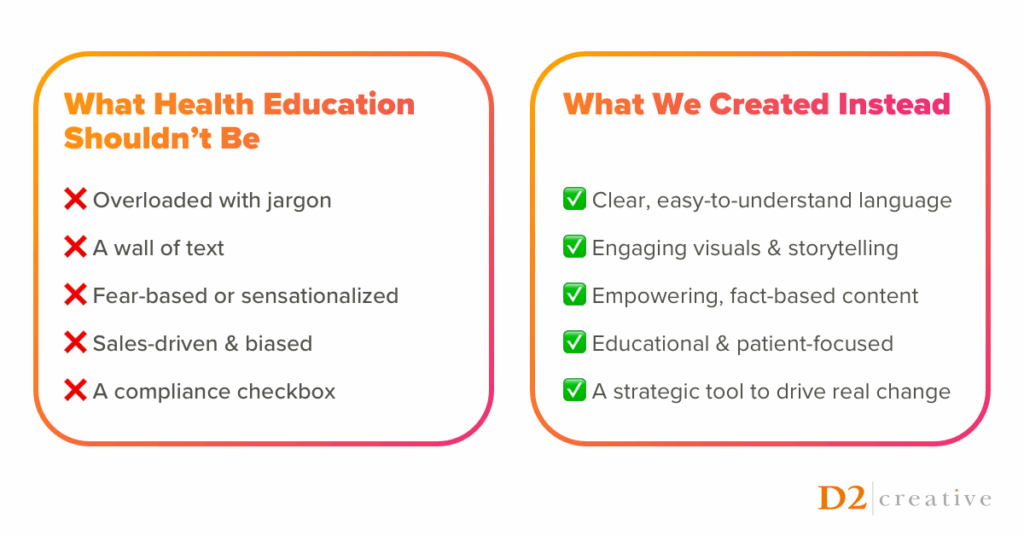
Issues with current health education versus the D2 Creative approach

Taking a More Creative Approach

The most effective way to approach creating educational content for patients is by doing it in a way that blends creativity, science, and compliance. This way you’re creating materials that are:


  • Designed for engagement – Use animation, engaging visuals, and compelling storytelling to simplify complex topics and hold attention.
  • Educational, not promotional – Focus your content on empowering patients, not selling to them.
  • Scientifically sound, not oversimplified – Translating complex concepts without dumbing them down helps user comprehension without feeling condescension.
  • Compliant but not boring – It’s important to keep regulatory constraints in mind, but that shouldn’t stop you from using metaphors or a touch of humor to help with explanations.
  • Backed by expertise – Don’t create content in a vacuum: collaborate with medical professionals, patient advocacy groups, and industry experts to ensure accuracy and relevance.

The Future of Patient Education Starts with You

With the right approach, you become the champion for meaningful, effective patient education.

Here’s a how the process of pivoting your patient education strategy:

Step 1: Define and Align. Start by clarifying your goals, your audience, and the topics that matter most. This sets the foundation for creating content that resonates.

Step 2: Create and Validate. From there, creative takes shape, bringing complex ideas to life in a way that’s clear, engaging, and medically sound. Establish ongoing input from patient advocates, which helps ensure accuracy and accessibility throughout.

Step 3: Deliver and Amplify. Finally, a smart distribution strategy helps your content reach the people who need it, where and when it matters most.

If you’re exploring ways to elevate your patient education efforts, we’re happy to take a look at what you’re working on and offer some ideas.


Empowering Patients Through Accessible Science: The Luminations Approach to Health Education

Navigating complex medical information can feel overwhelming for patients. Our solution? Luminations. This groundbreaking new patient education transforms abstract science into engaging, easy-to-digest animated videos. With Luminations, we combine creativity with clarity to educate patients and caregivers on even the most intimidating topics.

What are Luminations?

Luminations are bite-sized, shareable animations crafted to simplify complex scientific concepts. We partner with advocacy groups to deliver compelling education to patients facing life-altering diagnoses.

By blending vivid storytelling with hand-drawn animation, Luminations turn complex topics into visual narratives that resonate emotionally and intellectually.

Woman saying "Aha!" as she browses the internet on her laptop

Why Animation Works: Bridging Knowledge and Emotion

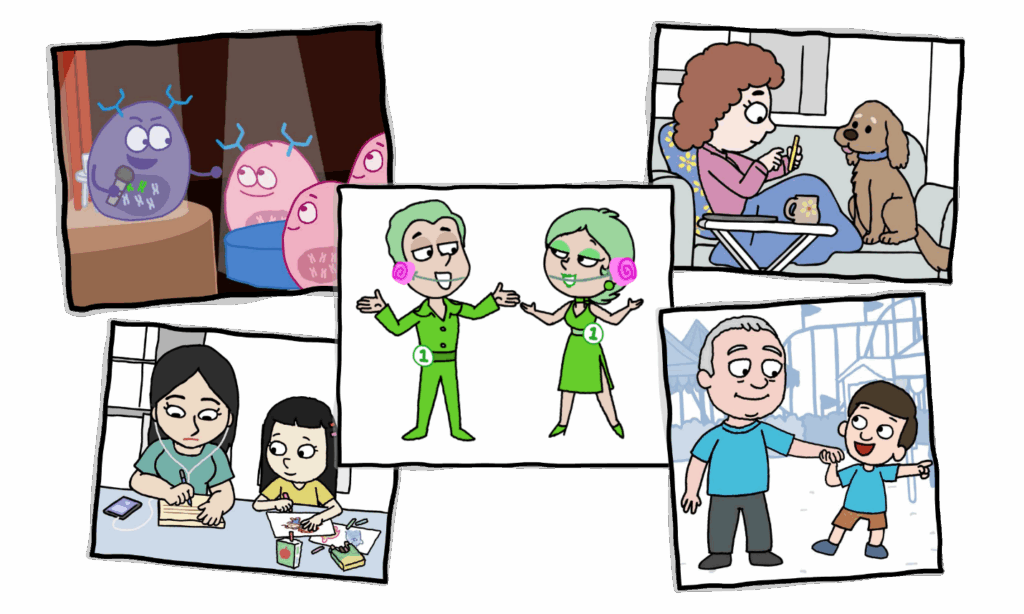
A selection of scenes from various luminations videos

The emotional turbulence of a diagnosis makes it difficult for patients to understand what’s going on. Luminations tackles this challenge head-on by creating a safe, approachable learning space. Here’s how:


  • Lighthearted Storytelling: Characters like mischievous cancer cells or heroic antibodies add whimsy to science, reducing fear without trivializing the disease. Humor is carefully directed at harmful biological elements, ensuring patients feel empowered, not alienated.
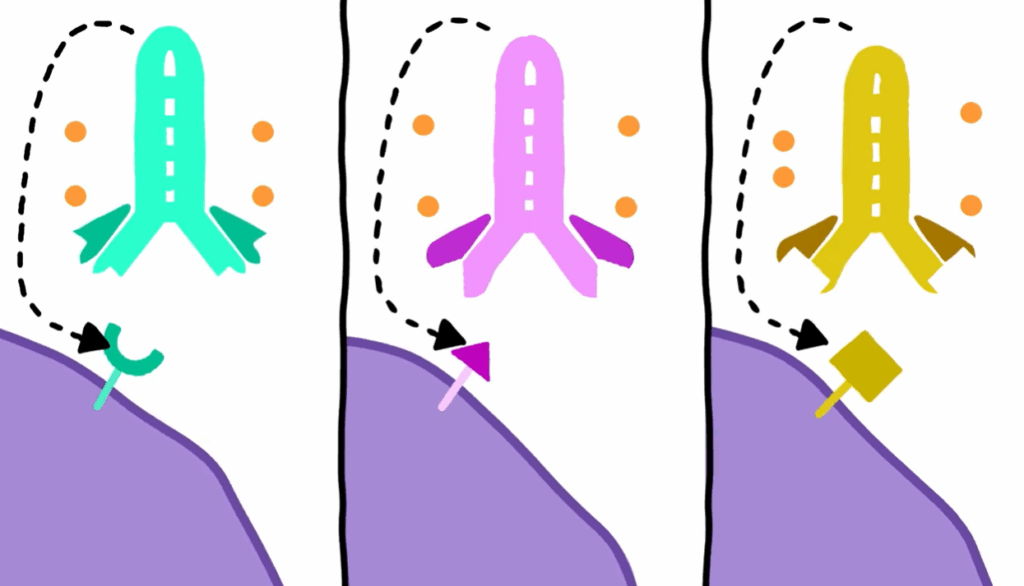
  • Visual Metaphors: Abstract ideas are grounded in relatable imagery. For example, a video might depict ADC “missiles” seeking out diseased cells for a simple visual reference.
Antibodies portrayed as different types of missiles
  • Emotional Relief: By Diffusing patients’ tension, they are more likely to engage with content


Our collaboration with CancerCare exemplifies this approach. Their video library includes explainers on topics like the role of the TROP2 biomarker in cancer, using animation to break down intricate science in under two minutes.

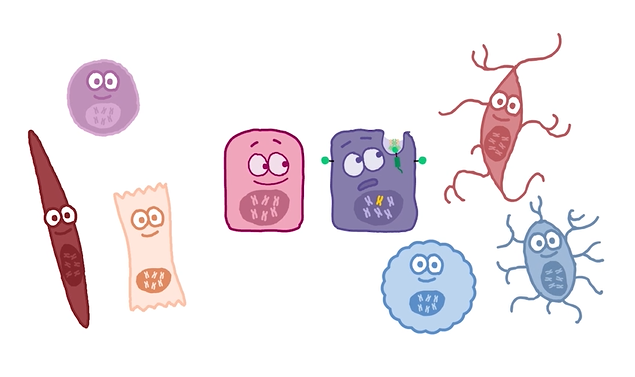
Different kinds of cells drawn in luminations style

What Sets Luminations Apart?

While many animated patient videos exist, Luminations stand out through two key pillars:

  1. Custom Hand-Drawn Artistry: Every Luminations video is hand-crafted by animators, not templates. This flexibility allows us to depict any scenario patients may be facing or need to know more about.
  2. Metaphors That Stick: Anchoring foreign concepts to familiar references (e.g., immune cells as “security guards”) makes content memorable. Patients don’t just learn—they retain and apply knowledge.

Beyond Patient Education: A Tool for Broader Audiences

While Luminations excel at educating patients, their applications extend further:


See the Science Come to Life

Our partnerships with Stand Up to Cancer, the Cholangiocarcinoma Foundation, and Pfizer redefine health communication. See how even the most daunting topics can become accessible (and even inspiring).

Ready to explore? Visit Luminations.Health to discover how animation is changing the face of patient education.